
The best adhesion aid may be no aid at all: textured build plates can handle most prints without an extra layer. When you need more first-layer grip, washable PVA glue stick is a practical starting point. The right choice for ABS, ASA, or PLA depends on the filament and build plate.
It makes sense to want one reliable fix for lifting corners or a first layer that will not stay put. But a glue stick vs. Dimafix vs. hairspray adhesion comparison has no universal winner. Glue stick can give ABS and ASA prints a decent hold while still allowing easy release, and hairspray can hold PLA as reliably as glue stick.
This comparison looks at how these options perform with ABS and ASA, PLA, first layers, and textured build plates. You’ll also find practical tips for applying adhesion aids and deciding when to skip them, so you can match the approach to your print and build plate.
Key Takeaways
- Match the adhesion aid to your filament and build plate instead of assuming one option works best for every print.
- For ABS and ASA, a glue stick can help the print hold while still making removal easier.
- Hairspray can help PLA stay put, but the type of spray can affect adhesion.
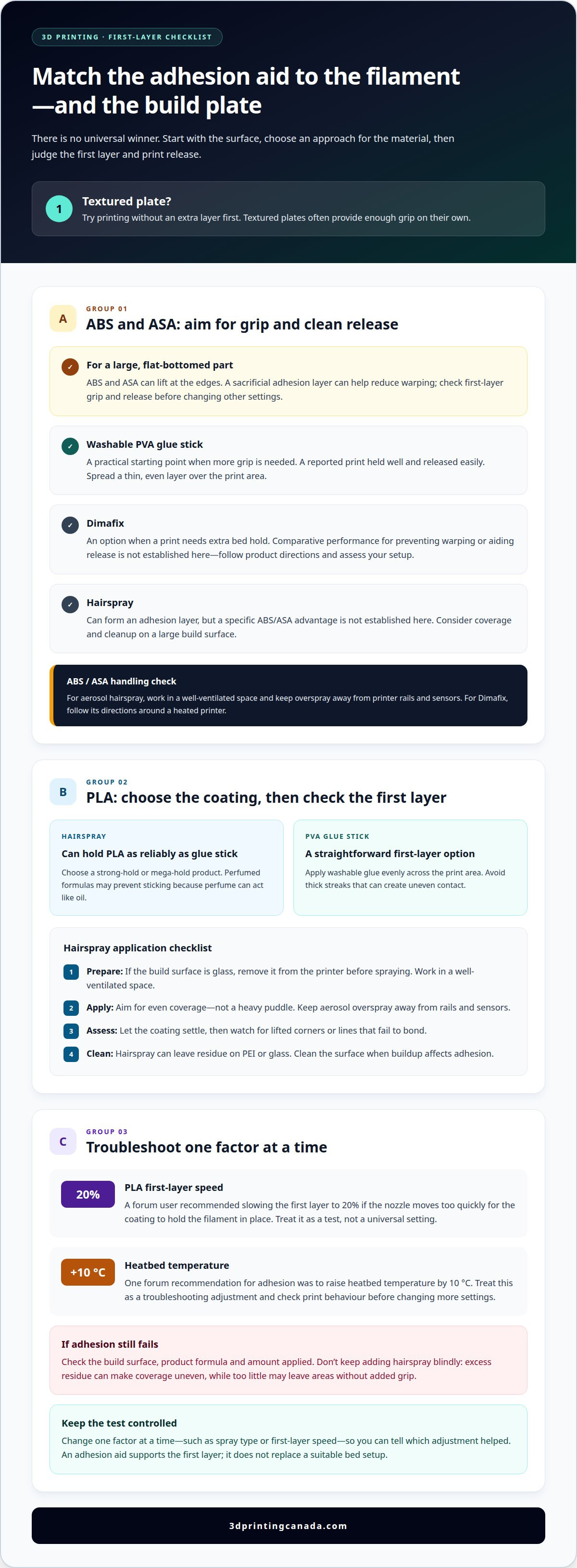
- Textured plates often provide enough grip on their own, so try printing without an extra layer first.
- Learn how application, residue, and cleanup can influence which option makes sense for your setup.
Adhesion for ABS and ASA prints
ABS and ASA can lift at the edges, especially on large, flat-bottomed parts. Choose an aid based on the build plate and how the print releases, then assess the first layer before changing several settings.
For large prints, a sacrificial adhesion layer can help reduce warping with ABS or ASA. Glue stick has been reported to provide a decent hold while still allowing easier release. Available comparisons do not establish that Dimafix or hairspray prevents warping more effectively.
Handle aerosol hairspray carefully: use it in a well-ventilated space and keep overspray off printer rails and sensors. For Dimafix, follow the product directions for use around a heated printer rather than assuming the same handling rules apply.
Dimafix on ABS and ASA
Dimafix is an option when an ABS or ASA print needs extra bed hold. Its comparative performance for preventing warping or aiding release is not established here, so don’t assume it will outperform glue stick on a large part. Follow its product directions, then judge the result by whether the first layer stays down and the finished print releases cleanly.
Hairspray on ABS and ASA
Hairspray can form an adhesion layer, but available comparisons do not establish a specific advantage for ABS or ASA. Unlike glue stick, aerosol application raises overspray concerns: keep it away from printer rails and sensors, and apply it in a well-ventilated space. Consider coverage and cleanup before using it on a large build surface.
Glue stick is a practical starting point when ABS or ASA needs more grip. One reported user experience found it gave a decent print that was easy to release. Apply a thin, even layer to the print area, then check whether the first layer holds. Repeated use without cleaning can leave gummy residue, so clean the plate when buildup affects coverage.
Bed temperature and first-layer contact also matter. One forum recommendation was to raise the heatbed temperature by 10 °C to help adhesion. Treat that as a troubleshooting adjustment, not a universal setting: check how the print behaves before making further changes. An adhesion aid can support the first layer, but it doesn’t replace a suitable bed setup.
| Option | ABS or ASA use | Warping and release | Handling point |
|---|---|---|---|
| Glue stick | Can help provide bed grip | A reported print held well and released easily | Clean residue when it builds up |
| Dimafix | Use according to product directions | Compare hold and release on your setup | Follow directions around the heated printer |
| Hairspray | Can provide an adhesion layer | Its ABS/ASA warping performance isn’t established here | Ventilate and protect rails and sensors from overspray |
For a large, flat ABS or ASA part, start with a suitable adhesion layer. Check first-layer grip and release before changing other settings.
Hairspray adhesion for PLA
Hairspray can hold PLA’s first layer as reliably as glue stick. It may be easier to apply evenly than a hand-spread layer, but the formula and application matter. For a useful glue stick vs. Dimafix vs. hairspray adhesion comparison on PLA, keep the filament and plate consistent.
Choose a strong-hold or mega-hold hairspray for bed adhesion. Perfumed formulas may prevent sticking because perfume can act like oil. If PLA still fails to grip after spraying, don’t keep adding coats blindly. Remove the residue, then try a suitable strong-hold product on a clean surface.
Apply hairspray carefully. If the build surface is glass, remove it from the printer before spraying. Work in a well-ventilated space and keep aerosol overspray away from rails and sensors. Aim for even coverage across the print area, not a heavy puddle beneath the model. Let the coating settle before replacing the glass and starting the print.
Can hairspray damage a PEI sheet, glass bed, or printer components? Hairspray can leave residue on PEI or glass, and overspray can reach rails or sensors. Apply it away from the assembled printer, and clean the build surface when buildup affects adhesion.
For PLA, test the first layer before changing several settings at once. A forum user recommended slowing the first layer to 20% when printing PLA. Try that adjustment if the nozzle moves too quickly for the coating to hold the filament in place. Watch for lifted corners or lines that fail to bond, then adjust the first-layer setup rather than adding spray repeatedly.
Hairspray is not a fix for every plate or print. One user reported that it did not work well and went back to glue stick. If adhesion is poor, consider the surface, spray formula, and amount applied. Excess residue can make coverage uneven, while too little may leave parts of the first layer without added grip.
- Prepare: remove glass before spraying and work in a ventilated space.
- Apply: use an even coating and protect printer rails and sensors from overspray.
- Assess: observe the PLA first layer, then adjust one factor at a time.
- Clean: remove residue if buildup interferes with an even coating.
Use this glue stick vs. Dimafix vs. hairspray adhesion comparison as a controlled test: change one factor at a time, such as the spray or first-layer speed. This makes it easier to identify which adjustment helps your PLA print.
PVA glue stick for first-layer adhesion
Washable PVA glue stick adds a thin adhesive layer between the build plate and print. It can improve first-layer adhesion, making it a straightforward option when PLA lines lift or fail to stay in place. Apply it evenly across the print area, avoiding thick streaks that can create uneven contact.
How much do glue stick, Dimafix, and hairspray cost in Canada? Prices vary by product type, package size, and retailer, so compare the amount and format you’ll use rather than assuming one option costs less. Washable PVA glue stick is readily available, while sprays and purpose-made adhesion products come in different formats.
For a small PLA part, spread a light, consistent coat over the print area. If adhesion remains weak, one forum user reported using two glue layers for PLA. Treat that as an example, not a default: extra glue can make residue harder to manage, and the plate may need cleaning before another application.
Consistency is one trade-off. Glue sticks can vary between batches and dry out with age, making the amount transferred to the plate less predictable. A stick that feels dry or leaves patchy marks may produce uneven coverage. Use a fresh, even layer and assess the first print before applying more.
Clean the plate when accumulated glue becomes gummy or uneven. Repeated applications without cleaning can leave residue that may need scrubbing with hot water. Let the surface dry before applying a new coat, and spread the PVA across the print area rather than over visible buildup.
On a textured build plate, first try printing without extra adhesive. If a particular print still needs help, apply a modest layer of glue rather than coating the entire plate. This focuses the adhesive where it is needed and simplifies cleanup after printing.
- Prepare: remove visible residue before starting another print.
- Apply: spread washable PVA evenly over the model’s footprint.
- Assess: inspect the PLA first layer before adding another coat.
- Clean: scrub gummy buildup with hot water, then dry the plate.
Glue stick suits users looking for a simple, accessible way to support first-layer adhesion. Dimafix and hairspray are alternatives, but compare how evenly each covers your plate, how well the first layer holds, and how much cleanup follows. For repeatable results, use the same plate preparation and application method across test prints. Change one factor at a time, such as coverage or the number of layers, to see whether the adjustment helped. If a thin, even coat works, there’s no need to add more adhesive.
Textured build plates and adhesion aids
Textured plates provide enough grip for most jobs without an extra coating. Add adhesive only when a particular print needs help, and consider the plate surface and cleanup method.
There isn’t one temperature for glue stick or Dimafix across every plate. A forum user recommended a 60 °C bed for PLA; for other material and surface combinations, use the printer and adhesion product’s guidance as your starting point.
Glue Stick
Washable PVA glue stick adds a spreadable layer, unlike aerosol hairspray, which can reach nearby printer parts. For PLA, a forum user recommended a 60 °C bed, but that figure isn’t a setting for every filament or surface. Apply glue evenly to the print area; wash away gummy buildup with hot water before recoating.
On textured plates, start without glue because the surface can provide sufficient adhesion for most jobs. If a print lifts, apply a thin layer to its footprint rather than coating the whole plate. A forum user reported using two glue layers for PLA, but repeated coats can build residue. Clean the plate when coverage becomes gummy or uneven, then let it dry before printing again.
Dimafix and Hairspray
Dimafix is a purpose-made adhesion aid, while hairspray is an aerosol coating. Don’t assume either has one bed-temperature setting for glass, textured plates, and other surfaces. Match the setting to the filament and plate, and follow Dimafix’s product directions. For hairspray on glass, remove the glass before spraying.
Apply aerosol hairspray in a well-ventilated space and keep overspray off printer rails and sensors. Isopropyl alcohol can remove hairspray residue from printer plates. For Dimafix, follow its application and removal directions rather than defaulting to glue-stick or hairspray cleanup steps. On a textured plate, first try printing without either product, as an added layer can complicate cleanup.
Blue tape is another option for PLA, but removal can be tricky: one user reported difficulty removing a PLA print from tape. The build surface matters as much as the adhesive. Keep the print footprint small when testing a new aid, so you can assess grip and cleanup without coating more of the plate than needed.
- Glue stick: spread a thin, even PVA layer; clean gummy residue with hot water.
- Dimafix: apply and remove it according to its product directions.
- Hairspray: remove glass before spraying, ventilate, and protect printer components.
- Textured plate: test the print without added adhesive before applying a coating.
Glue sticks can vary between batches and dry out with age, making the amount of adhesive applied inconsistent. Washable PVA sticks are cheap and accessible, but can be a drawback for day-after-day production schedules.
A Prusa forum moderator advised removing glass before applying hairspray. Strong-hold, alcohol-based aerosol hairspray can provide even coverage across a 3D printer bed. One forum user reported using 2 layers of glue for PLA bed adhesion.
Which 3D printing materials work best with glue stick, Dimafix, or hairspray?
Start with the filament and build plate, not the adhesive label. PLA has reported use cases for washable PVA glue stick and hairspray, while ABS and ASA have a reported glue-stick example. Dimafix belongs in the comparison, but the available material-specific examples do not establish it as the best choice for any one filament.
For PLA, hairspray can hold the first layer as reliably as glue stick. That does not mean every spray or plate will produce the same result. One user found hairspray ineffective and returned to glue stick, so treat the choice as a practical test: apply one aid consistently and assess the first layer before switching products.
Washable PVA glue stick can improve first-layer adhesion. One reported PLA example used two glue layers, but more adhesive is not automatically better. Repeated applications without cleaning can create gummy buildup. On a textured plate, first try printing without an aid, since textured surfaces can handle most jobs on their own.
Glue stick has a reported use case for ABS and ASA: one user described a decent print that released easily. This makes it a reasonable option to test when these materials need more bed grip. A large, flat-bottomed ABS or ASA print may benefit from a sacrificial adhesion layer, especially if warping is a concern. The reported comparison does not establish better material-specific results for Dimafix or hairspray.
| Material or surface | Option to consider | Practical decision |
|---|---|---|
| PLA | Glue stick or hairspray | Both have reported first-layer use; test the one that applies cleanly to your plate. |
| ABS or ASA | Glue stick | A reported print held well and released easily; assess the result on your setup. |
| Textured plate | No added aid first | Textured plates can manage most jobs without an extra layer. |
| Dimafix | Use as an option to compare | Choose based on first-layer hold and release, not an assumed filament advantage. |
Make the comparison controlled: keep the filament, plate, and print settings the same, and change only the adhesion aid. Check whether the first layer stays down and whether the finished print releases cleanly. This simple test helps distinguish a material match from a coating problem.
One forum user reported that hairspray did not work well for them and they went back to glue stick. This report sits alongside the PLA examples rather than cancelling them: it shows why an adhesive should be judged on the actual plate and print, not just its label. If hairspray gives an uncertain first layer, a glue-stick trial offers a direct comparison, provided the filament, plate, and settings stay the same. Note both whether the first layer holds and whether the print comes away cleanly; together, these observations help you decide whether to keep or change the aid.
Keep the coating method consistent during each trial, and avoid changing products mid-comparison. If results vary, clean the plate before trying again so residue from an earlier application does not cloud the comparison. For textured surfaces, keep the no-aid starting point; for other surfaces, use the same criteria to decide whether glue stick, hairspray, or Dimafix merits another test. The forum report is a reason to check performance, not evidence that one option always wins.
3D Printing Canada
3D Printing Canada offers 3D printer repair services for hardware problems that can affect consistent first layers. If adhesion remains unreliable after you’ve matched the aid to the filament and build plate, printer hardware may also need attention. A repair can help address equipment issues, while the right adhesive still depends on your material, plate, and print setup.
For a straightforward choice, start with the plate manufacturer’s guidance and test one adhesion method at a time. If repeated first-layer problems point to a printer issue rather than the coating, contact 3D Printing Canada to discuss its 3D printer repair services.
Build a repeatable first-layer routine
Turn your next print into a useful reference point. Record the filament, build plate, adhesion aid, and first-layer result in a simple print log. Those notes can help you spot whether a change in material or surface affects consistency, instead of relying on memory between projects.
A comparison of glue stick, Dimafix, and hairspray is most useful when it leads to a repeatable setup. Note what you changed and what happened, then use the successful approach for similar prints. Over time, your own printer’s results can guide what to try next.
If you’d like to talk through your setup or an ongoing printer issue, contact 3D Printing Canada about your printer. Keep experimenting thoughtfully, and let each print help you make the next one more predictable.
Frequently Asked Questions
How do glue stick, Dimafix, and hairspray compare for 3D printer bed adhesion?
No single aid suits every filament and plate. For PLA, glue stick and hairspray both have reported first-layer use; for ABS and ASA, glue stick has a reported easy-release example. Dimafix is another option, but compare results on your setup rather than assuming a ranking. Keep the filament, plate, and print settings consistent, then change only the adhesion aid. Note edge lift, line bonding, and cleanup.
How do glue stick, Dimafix, and hairspray affect first-layer adhesion and print removal?
Each option adds a layer between the print and build surface, which can help the first layer hold. One reported ABS print with glue stick released easily, while hairspray can hold PLA’s first layer as reliably as glue stick. For a useful comparison, check both how securely the first layer bonds and how cleanly the finished print comes away. Remove leftover coating with a method suited to that aid and plate.
What temperatures are recommended for Dimafix and glue stick on different build surfaces?
There isn’t one recommended temperature for glue stick or Dimafix across different build surfaces. One forum suggestion is to raise the heatbed temperature by 10°C to help adhesion, then assess the first layer before making further changes.