
Why does the exact same spool that produced flawless results in July leave you with brittle, snapping parts by the time a Canadian January hits? Choosing between resin & filaments in 2026 is no longer just about deciding between fine detail and structural strength. It's about matching your material's chemistry to your printer's maximum speed and your local environment. Whether you're pushing a CoreXY machine to its 600 mm/s limit or curing a high-resolution miniature, the wrong choice leads to wasted time, failed prints, and unnecessary plastic waste.
We've all dealt with the headache of poor bed adhesion or models that shatter the moment they're handled. It's frustrating when your hardware is capable but your materials let you down. You need crisp, high-resolution models and functional parts that withstand the extremes of our climate. This guide will help you master the technical differences between modern resins and filaments so you can select the perfect match for your machine. We'll dive into high-flow formulations for high-speed printers, explain how to stay compliant with the 2026 Federal Plastics Registry, and show you how to source cost-effective bulk materials. Let's get your workshop running with the reliability and precision you deserve.
Key Takeaways
- Identify the best material for your specific goals by understanding how 2026 material science has evolved to support both aesthetic prototypes and rugged mechanical parts.
- Compare the high-speed capabilities of modern PLA against the micron-level resolution of resin & filaments to choose the right technology for your printer's speed.
- Learn to utilize specialized materials like the Spectrum Nature PLA Algae series or Carbon Fibre PETG to achieve unique textures and superior impact resistance.
- Protect your prints from the Canadian climate by mastering moisture management techniques that prevent brittle parts and poor bed adhesion.
- Discover how to source high-quality consumables in bulk while ensuring your workshop stays compliant with the latest environmental regulations.
Navigating the 3D Printing Material Landscape in 2026
2026 has brought a massive shift in how we view 3D printing consumables. Material science has moved past "general purpose" options to highly specialized formulas designed for specific hardware. The market for resin & filaments has split into hyper-specific categories, each tailored to different mechanical or aesthetic requirements. If you're running a high-speed CoreXY platform like a Bambu Lab, your material needs are vastly different from someone using a traditional bed-slinger. Canadian makers are increasingly choosing high-speed optimized consumables to keep up with these faster cycle times without sacrificing part strength.
Identify your goals early to avoid wasting material. Are you building an aesthetic prototype that needs to look like a finished product, or a functional mechanical part that will spend its life in the harsh Canadian outdoors? This decision dictates your choice between resin & filaments. Resin offers incredible detail for miniatures and jewellery, while filaments provide the structural integrity and heat resistance required for tools, brackets, and outdoor gear. With over 1,100 products now available in our shop, finding the right fit is about understanding these core differences.
Understanding the Core Mechanics
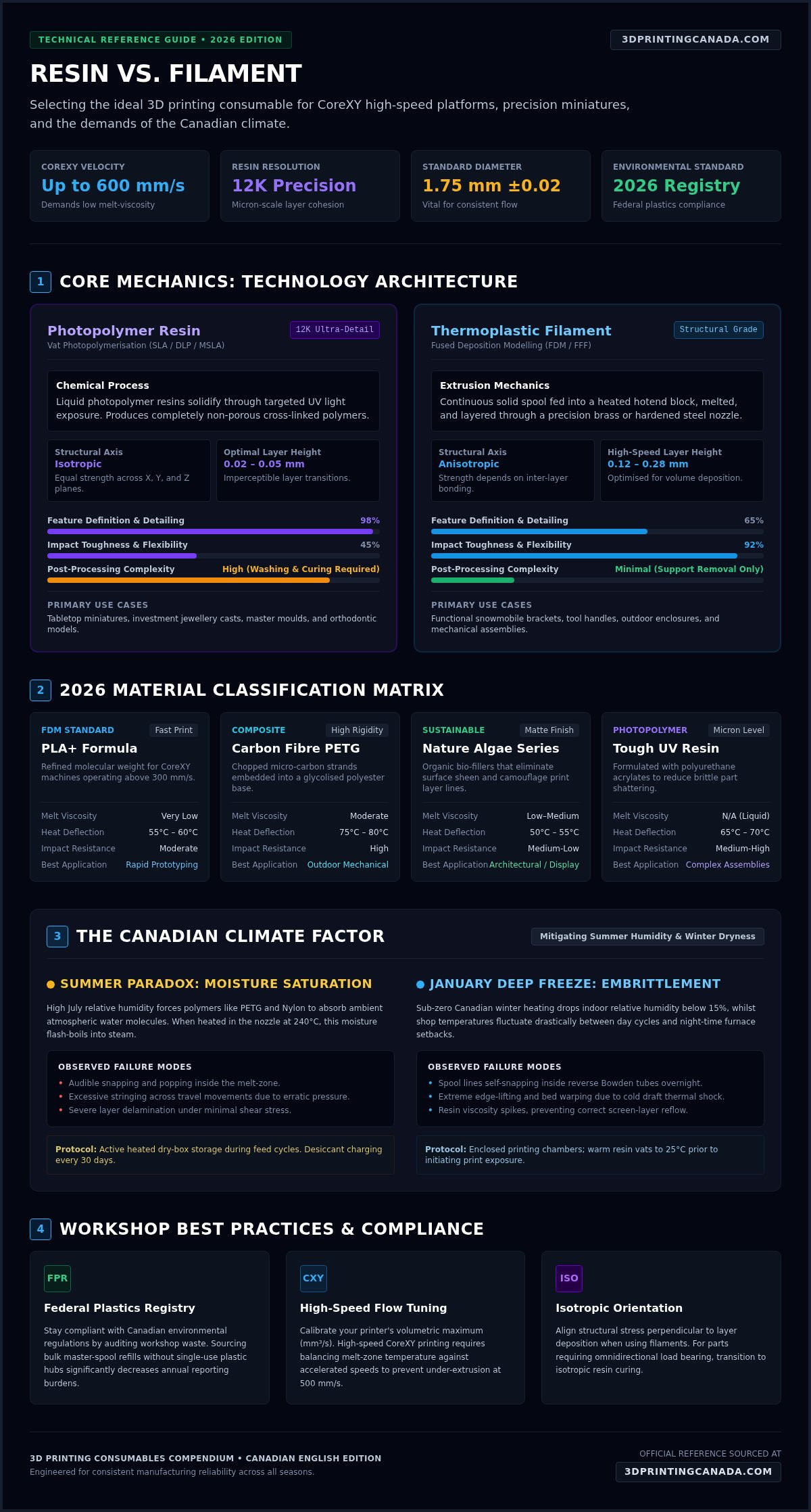
At the heart of the hobby, you're choosing between two distinct chemical processes. Most FDM printers use thermoplastic 3D printing filaments that melt and extrude through a heated nozzle. In contrast, resin printers use liquid photopolymers that solidify when exposed to specific wavelengths of UV light. Your final surface finish depends on a few key factors:
- Layer Height: Thinner layers in resin produce nearly invisible transitions for high-resolution models.
- Material Flow: High-speed filaments require lower melt viscosity to avoid under-extrusion at 500 mm/s.
- Diameter Consistency: A steady 1.75mm width is vital for maintaining consistent pressure in the hotend.
Canadian-made filaments, like our reliable PLA+, are engineered to tight tolerances to prevent the clogs and gaps that ruin long prints. Maintaining this consistency allows you to fine-tune your flow rates and retraction settings, resulting in parts that fit together perfectly every time.
The Rise of Specialty Bio-Fillers
We're seeing a push toward materials that offer more than just plastic. Specialty bio-fillers are changing the game by introducing organic textures and sustainable profiles. Products like the Spectrum Nature PLA Algae series use real organic matter to create a unique, earthy aesthetic you won't find in standard synthetics. These fillers don't just help the environment; they change the visual feel of the object, masking layer lines and giving your projects a premium, matte finish that stands out from the crowd. It's an excellent way to realize complex designs with a look that feels more like a finished product than a plastic prototype.
Resin vs. Filament: Deciding on the Best Tech for Your Project
Deciding between resin & filaments often comes down to a trade-off between visual perfection and mechanical toughness. While high-speed PLA has made massive strides in resolution, it still can't compete with the micron-level precision of a 12K resin screen. If you're building a bracket for a snowmobile or a custom tool handle, the impact resistance of PETG or PLA+ far outweighs the surface finish of a standard photopolymer. You need to weigh the intended use of the part against the time you're willing to spend on post-processing.
Recent additive manufacturing polymer research highlights how the curing mechanisms in resin create isotropic parts, meaning they're equally strong in all directions. FDM filaments are anisotropic; they're naturally weaker along the layer lines. This is a critical distinction for Canadian makers building functional parts that must survive extreme temperature swings or mechanical stress. When comparing resin & filaments, consider the cost per gram too. While filament is generally more affordable for bulk projects, the lack of waste and high success rate of modern resin can make it a better long-term investment for small, complex designs.
Workflow is the other major factor. FDM is largely a "print and go" technology. You peel the part off the bed, and it's ready for work. Resin requires a multi-step process involving isopropyl alcohol (IPA) baths and UV curing stations. You also need to manage safety gear like nitrile gloves and proper ventilation to meet Canadian WHMIS standards. While resin results are stunning, the time investment per part is higher.
When to Choose Resin
Choose resin for miniatures, jewellery, or dental models where detail is the priority. It allows you to achieve injection-mould quality finishes without hours of sanding. Because modern 8K and 12K printers capture such fine data, your models will look professional right out of the curing station. If you're looking for that level of detail, browse our high-resolution resin collections to find a formula that fits your specific project.
When to Choose Filament
Filament is the clear winner for large-scale prints and functional tools. If you're utilizing a multi-material system like the Bambu Lab AMS, you can even print support structures in different materials for easy removal. It's the go-to for rapid prototyping and production runs where speed is essential. For outdoor equipment that needs to survive a Canadian summer or winter, filaments like PETG or ASA offer the UV and heat resistance that standard resins lack.
A Breakdown of Popular Filaments: From PLA to Carbon Fibre PETG
Choosing the right spool is about more than just picking a colour. In 2026, the hardware in your shop likely prints faster than anything we saw five years ago. This means your choice of resin & filaments must account for how quickly a material can melt and solidify. Standard plastics often struggle to keep up with modern volumetric flow requirements, leading to under-extrusion or weak layer bonds. To get the best results, you need to match your material's flow characteristics to your printer's speed settings.
While PLA is generally low-odour and easy to handle, always refer to filament emissions and safety research to ensure your workspace has adequate ventilation. This is especially true as you move into specialized engineering materials that require higher temperatures. Understanding the chemical makeup of your feedstock helps you maintain a safe and productive printing environment.
The PLA Spectrum: From Silk to Pro
PLA remains the most accessible entry point for Canadian makers, but the variety has expanded significantly. Spectrum Magic SILK is a top choice for aesthetic projects; its colour-shifting properties hide layer lines beautifully and add a premium feel to decorative models. If you need high precision for mechanical prototypes, Arctic White Spectrum PLA Pro is a favourite for its superior dimensional stability and impact resistance. For a reliable, local option that doesn't break the bank, Aqua Canadian-made PLA+ provides the consistency needed for long, unattended prints. It's a dependable workhorse that handles the varied humidity levels found across the provinces.
Functional Excellence with PETG and ASA
PETG and ASA are your primary choices for anything that leaves the office. ASA 275 is specifically engineered for UV resistance, making it the best choice for Canadian outdoor applications that face intense sun and freezing winters. It offers the weatherability of ABS without the intense warping or harsh fumes. For those pushing 2026 hardware to the limit, R3D High Speed Carbon Fibre PETG is a game-changer. This material incorporates chopped carbon fibre to increase stiffness and reduce shrinkage. It's designed for high-speed extrusion, allowing you to produce tactical, industrial-grade parts at speeds exceeding 300 mm/s. Managing bed adhesion with these advanced blends is straightforward if you use a clean, textured PEI sheet and ensure your filament is thoroughly dry before the print begins.
Specialized Materials for Professional Results
Professional results in 2026 depend on more than just mechanical strength. Sometimes, the visual texture of a part is the most critical requirement. While standard resin & filaments cover the basics, moving into specialized materials allows you to hide layer lines and achieve finishes that look like they came off a retail shelf. For example, R3D High Speed Matte PLA is a favourite for those running fast machines. The matte finish naturally diffuses light, making the ridges between layers almost invisible. This is a huge advantage over high-gloss materials that highlight every minor imperfection.
If you're looking to expand your material palette without blowing your budget, consider multi-packs and refills. Buying in bulk or using reusable spool systems is an economical way to keep a variety of colours on hand. It reduces the cost per project and minimizes the plastic waste generated by empty spools. It's a pragmatic approach that helps you maintain a diverse inventory while staying organized.
Sustainable Printing with Algae Filaments
The shift toward sustainable making has introduced unique bio-filled options like the Spectrum Nature PLA Algae and Algae Nori series. These aren't just eco-friendly; they offer a distinct, organic texture that synthetic plastics can't replicate. Spectrum Nature PLA Algae provides a lighter, earth-toned look, while the Nori variant offers a deeper, sea-green hue. These materials are excellent for architects or designers who want their models to have a natural, less "plastic" feel.
Printing with these bio-fillers requires a bit of finesse. To avoid nozzle clogs, we recommend using a 0.5mm or 0.6mm nozzle. The organic particles are larger than standard pigment molecules. Keep your retraction settings slightly lower than usual to ensure a smooth flow. The result is a stunning, matte, earth-toned object that feels premium and unique.
Visual Effects: Silk, Magic, and Glitter
When a project needs to pop, visual effects materials like Aurora Bloom Magic SILK are the go-to. This filament uses a dual-colour extrusion process to create dynamic colour-shifts as you rotate the printed object. It's perfect for artistic pieces and display models. If you need something more rugged but still want that visual flair, Spectrum Glitter PET-G provides a durable, sparkling finish in deep shades like "Aurora Gold" or "Aztec Gold".
For industrial-style projects that need a sleek, professional look, "Anthracite Grey" in a high-speed matte finish is hard to beat. It provides a clean, metallic appearance without the printing difficulties often associated with true metal-fill filaments. Explore our full range of specialized filaments to find the exact finish your next project requires.
Essential Tips for Buying and Storing Your Printing Materials
Buying the right resin & filaments is only half the battle. If you don't store them correctly, even the highest quality Canadian-made PLA+ will eventually fail you. High-speed printing in 2026 makes this even more critical; wet filament causes steam pockets that lead to "popping" and surface blobs at speeds of 500 mm/s. Before you buy, check for consistent winding on the spool and prioritize manufacturers that use vacuum-sealed packaging with fresh desiccant. This ensures you're starting with a material that hasn't already been compromised by warehouse humidity.
Moisture is the primary enemy of PETG, TPU, and specialized engineering resins. In Canada, our indoor environments swing from 15% relative humidity in the winter to over 80% in the summer. This cycle ruins hygroscopic materials in as little as 24 hours if they're left out on the rack. You also need to synchronize your nozzle temperature with your print speed. Pushing high-speed filaments through a cold nozzle leads to immediate clogs, while over-heating standard PLA causes heat creep and jammed extruders.
Proper Storage Techniques
Keep your filaments in dedicated dry boxes or sealed containers with active desiccant. If you notice excessive stringing or a rough surface finish on a material that used to print cleanly, it's a sure sign your spool has absorbed moisture. For resin, light-tight storage is non-negotiable. Even ambient UV light from a window can partially cure the liquid in your vat or bottle. Maintain your resin storage area between 20°C and 25°C; cold resin becomes too viscous, which leads to failed layers and delamination during the peel cycle.
Maximizing Your Investment
Organizing your shop with high-speed refills is the smartest way to save money and reduce environmental impact. Refills fit onto reusable master spools, cutting down on the single-use plastic waste that the 2026 Federal Plastics Registry aims to reduce. If you're looking to experiment with new properties, testing with ASA 275 Multi Packs is a great strategy before you commit to large 5 kg spools. This allows you to dial in your settings for UV-resistant outdoor parts without a large upfront investment. Having a diverse, well-maintained inventory means you're always ready for the next creative challenge. Browse our full range of 1,100+ resins and filaments today! and ensure your next project is a success.
Elevate Your 3D Printing Projects with the Right Materials
Mastering the technical nuances of resin & filaments gives you the ultimate creative edge. You've learned how to sync material flow with high-speed hardware and how to safeguard your spools against the humidity of a Canadian summer. Whether you're printing functional parts that withstand our climate or intricate models with bio-filled textures, your material choice defines your success. We're here to be your dependable partner in every layer of that journey.
Ready to upgrade your inventory? Shop the Best Selection of Resin & Filaments in Canada to find exactly what you need. With over 1,100 products in stock and fast national shipping across Canada, your next spool is never far away. We don't just sell the tools; we back them up with expert technical support and nationwide repair services to ensure your creative momentum never stops. Grab your next material today and start building something incredible.
Frequently Asked Questions
Is PLA filament biodegradable in typical Canadian composting conditions?
PLA is not biodegradable in your backyard compost bin or a typical Canadian landfill. It requires the controlled high-heat and specific moisture levels of an industrial composting facility to break down properly. Without these industrial conditions, a failed PLA print will last as long as traditional plastics. If you're concerned about environmental impact, look into our bio-filled options or participate in specialized plastic recycling programs designed for PLA.
Can I use high-speed PLA in a standard, older 3D printer?
You can absolutely use high-speed PLA in a standard, older 3D printer. These filaments are engineered with a lower melt viscosity, which often makes them more reliable than standard spools even at lower speeds. While they're designed for the 500 mm/s speeds of 2026 hardware, they provide excellent flow and reduced clogs on older machines. It's a great way to modernize your existing setup without immediately upgrading your hardware.
What is the main difference between PLA and PLA+?
The main difference lies in the chemical additives used to improve the material's mechanical properties. Our Canadian-made PLA+ is modified to be significantly less brittle than standard PLA, offering better impact resistance and superior layer adhesion. While standard PLA is great for simple visual models, PLA+ is the better choice for functional parts that need to survive mechanical stress. It's the reliable workhorse for makers who need consistent, professional results.
How do I know if my 3D printer filament is food safe for kitchen gadgets?
Identifying food-safe materials requires checking the manufacturer's technical data sheets for Health Canada or FDA compliance. While some PETG filaments are technically food-safe, the 3D printing process creates tiny ridges between layers that trap bacteria. For kitchen gadgets, you'll need to coat your final print in a food-grade epoxy resin. Always ensure your nozzle is made of stainless steel to avoid lead contamination from standard brass nozzles during the print.
Why is my PETG filament stringing more than my PLA?
PETG is naturally more "sticky" than PLA and has a higher affinity for moisture. When PETG absorbs water from the air, it turns into steam in the hotend, causing the oozing and stringing you see on your prints. To fix this, dry your filament in a dedicated dryer at 65°C for at least six hours. Increasing your retraction speed and lowering your print temperature slightly can also help manage these messy transitions.
How should I dispose of unused or failed resin prints safely?
You must never pour liquid resin down the drain or throw uncured prints in the trash. Canadian environmental regulations require all photopolymer waste to be fully cured under UV light until it's a solid, inert plastic. Once hardened, failed prints can be disposed of in your regular waste. For large amounts of liquid waste or contaminated wash water, contact your local municipal hazardous waste program to ensure you're staying compliant with federal rules.
Does 3D Printing Canada offer bulk discounts for school or business orders?
We certainly provide support for schools, libraries, and businesses across Canada with bulk purchasing options. Whether you're stocking a makerspace or a professional prototyping lab, we offer competitive pricing on large orders of resin & filaments. Our team can also assist with technical support and repair services to keep your fleet of printers running efficiently. Reach out to our staff to discuss your specific volume requirements and national shipping logistics.