
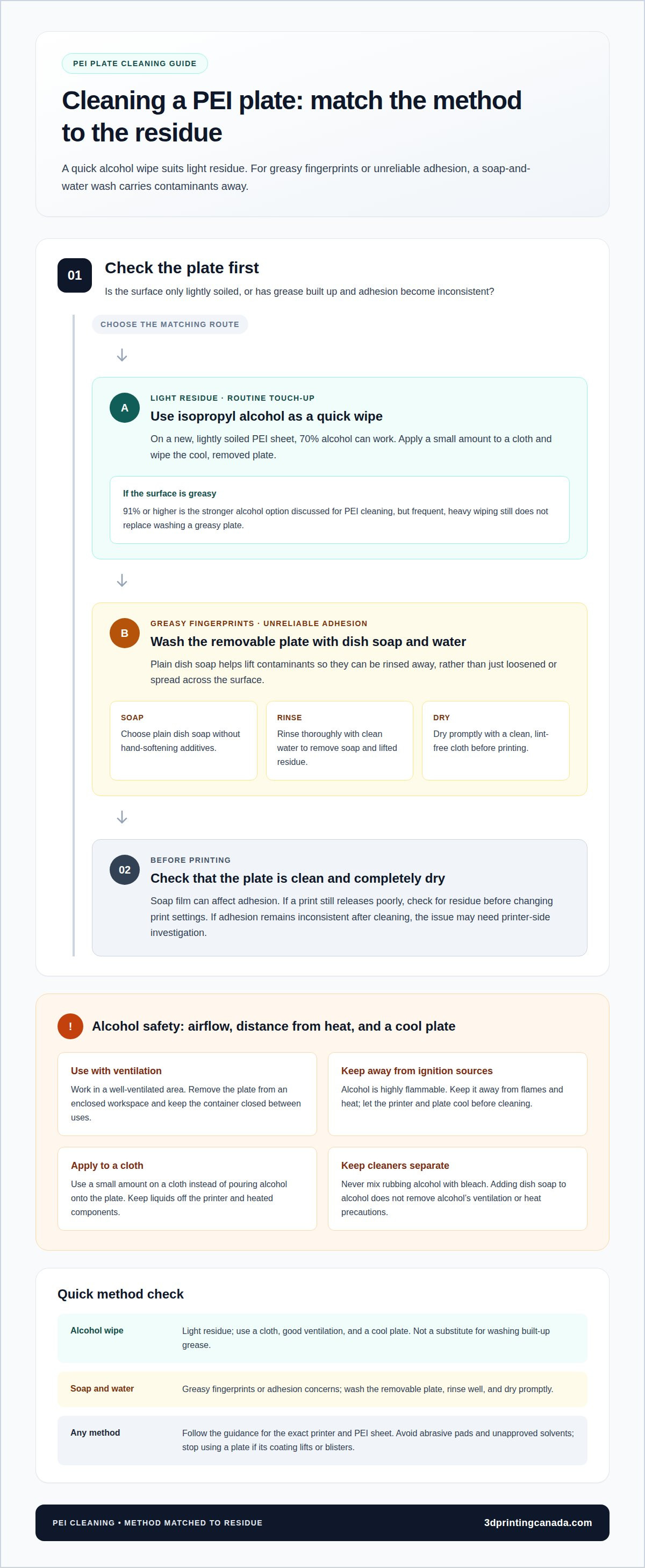
When comparing isopropyl alcohol vs dish soap for cleaning a PEI bed, dish soap and water are the better choice for greasy fingerprints and grime. Soap helps lift contaminants so you can rinse them away, while alcohol can loosen grease without removing it all from the surface. A quick wipe isn’t always a thorough clean.
Alcohol is convenient between prints, and a light wipe can help remove surface residue. But if adhesion becomes unreliable, washing the removable plate with dish soap and water is more thorough. Choose plain dish soap without hand-softening additives, rinse well, and dry the plate before printing. If using isopropyl alcohol, keep it away from heat and flames, and work in a well-ventilated area.
This guide explains when each cleaner is useful, how to avoid leaving residue, and why a homemade mixture isn’t a substitute for washing the plate. It also offers a practical way to choose between routine touch-ups, greasy buildup, and prints that need extra care during removal.
Key Takeaways
- For greasy fingerprints, washing the removable PEI plate with plain dish soap and water helps carry contaminants away rather than just spreading them around.
- Use isopropyl alcohol as a quick wipe for light residue, not as a substitute for a thorough wash when grease has built up.
- Keep alcohol away from flames and heat, and use it where there’s good ventilation.
- Choose dish soap without hand-softening additives, which can leave residue that affects print adhesion.
- Learn how alcohol concentration, plate texture and cleaning technique influence the result before choosing your routine.
Ventilation and flammability precautions
Isopropyl alcohol makes a quick PEI plate wipe convenient, but it presents fire and fume risks. Washing with dish soap and water avoids alcohol vapour during cleaning.
Ventilation Precautions
Use isopropyl alcohol in a well-ventilated area to limit exposure to concentrated fumes. Remove the plate from an enclosed workspace before wiping, and keep the container closed between uses. Even a small amount on a cloth needs airflow. Ventilation matters for brief cleaning jobs, especially if you use alcohol repeatedly around a household printer.
Flammability Precautions
Rubbing alcohol is highly flammable, so keep it away from open flames and heat sources. Don’t wipe a plate beside a lit candle, gas burner, or heated printer bed. Turn off nearby heat, let the plate cool, and keep alcohol-soaked cloths away from ignition sources. Never mix rubbing alcohol with bleach; use one cleaner at a time.
Prepare the cleaning area before opening the alcohol. Remove the PEI plate from the printer and place it on a stable surface away from heat. Apply a small amount to a cloth instead of pouring it onto the plate. This limits spills and keeps liquid away from printer components. After wiping, leave the plate in a ventilated area until the alcohol has completely evaporated. Don’t reinstall it near a heat source while the surface is wet.
- Move the plate and alcohol away from flames and heated equipment.
- Open the container only in a ventilated space.
- Use a cloth to apply alcohol, then close the container.
- Keep alcohol separate from bleach and other cleaning products.
- Allow the plate to dry before returning it to the printer.
Dish soap and water work well for washing at a sink, while alcohol requires extra care with airflow and ignition sources. Adding a few drops of dish soap to alcohol doesn’t remove the alcohol-related precautions. The mixture still contains rubbing alcohol, so keep it ventilated and away from heat.
| Cleaning option | Ventilation | Heat and flame | Practical use |
|---|---|---|---|
| Isopropyl alcohol | Use in a ventilated area | Keep away from flames and heat | Apply sparingly with a cloth |
| Dish soap and water | No alcohol fumes | No alcohol-related ignition precaution | Wash the removable plate |
| Alcohol with dish soap | Use in a ventilated area | Keep away from flames and heat | Retain alcohol precautions |
Choose dish soap and water for a full plate wash. Use alcohol only with good airflow and in a cool work area. Keep alcohol away from fabric, as it can discolour or stain it, and don’t leave an alcohol-wet cloth near household heat sources.
Surface compatibility and damage risks
Your choice of cleaner affects the PEI coating and print adhesion. Match the method to the plate’s condition, then remove every trace of cleaner before printing.
Isopropyl Alcohol Concentrations
For a new, lightly soiled PEI sheet, 70% isopropyl alcohol can work, but it’s less effective on accumulated grease. For greasy buildup, 91% or higher is the stronger option discussed for PEI cleaning. Choose alcohol without scents or skin-care additives. Neither concentration makes frequent, heavy wiping a substitute for washing a greasy plate.
There isn’t a universal rule that 99% is always better. The useful distinction is the contamination: a quick wipe on a clean sheet differs from trying to remove fingerprints and grease. If alcohol leaves the surface looking clean but adhesion remains inconsistent, wash the plate with dish soap and water instead.
Cleaning a Hot PEI Bed
Don’t apply isopropyl alcohol to a hot PEI bed. Let the printer and plate cool, then remove the plate for cleaning. Alcohol is highly flammable, and heat increases the risk during use. A cool plate is also easier to handle without touching the print surface unnecessarily.
Keep cleaning liquids off the printer itself. Apply them to a cloth, not to a plate mounted above heated components. Letting the plate cool first also helps avoid splashing water onto a hot surface during a soap wash. Dry the removable plate before reinstalling it.
Dish Soap Residue
Dish soap can affect adhesion if it leaves a film on PEI. Use plain dish soap without hand softeners or other additives, then rinse the plate thoroughly with clean water. Dry it with a clean, lint-free cloth. If a print still releases poorly, check for residue before changing print settings.
Water helps carry away grease and soap, but don’t let it sit around damaged plate edges. A forum user reported water seeping under the PEI coating of a cheap plate and causing bubbles when heated. Take this as a reason to wash gently, dry promptly, and stop using a plate if its coating lifts or blisters.
Manufacturer Cleaning Recommendations
Cleaning instructions can vary by build plate, so follow the guidance supplied for your exact printer and PEI sheet. It takes priority over general advice. Textured and smooth surfaces may also respond differently to handling, so avoid abrasive pads and unapproved solvents that could alter the coating.
Hydrogen peroxide isn’t a substitute for the plate maker’s cleaning directions. Keep cleaning products, including alcohol and hydrogen peroxide, away from children. Whatever cleaner you use, apply a small amount, rinse when appropriate, and let the plate dry completely before printing.
Choose 70% alcohol for light residue, higher-concentration alcohol for grease, and a soap wash when contaminants need rinsing away. If adhesion problems persist after the plate is clean, 3D printer repair services can help investigate printer-side issues.
Alcohol-and-dish-soap cleaning recipes
For isopropyl alcohol vs dish soap when cleaning a PEI bed, the choice depends on whether you need a quick wipe or a wash. Soap helps lift grease so water can carry it away. Alcohol can loosen grease, but wiping may spread grime across the plate rather than remove it. A combined cleaner may sound convenient, but it doesn’t replace rinsing.
To wash a PEI bed, remove the cool plate from the printer. Use plain dish soap and warm water, then rinse thoroughly and dry with a clean cloth. Avoid soaps with hand-softening additives, which may leave a film that affects adhesion. The aim is to remove both contaminants and soap residue before printing.
- Let the plate cool, then remove it from the printer.
- Wet the surface with warm water and apply plain dish soap.
- Wash gently, paying attention to fingerprints and greasy spots.
- Rinse until no suds or slippery soap film remain.
- Dry the plate completely with a clean cloth before printing.
Use rubbing alcohol differently: apply a small amount to a clean cloth and wipe light residue from an otherwise clean plate. Alcohol can break down grease, but wiping doesn’t rinse the contaminants away. If fingerprints remain or adhesion is still poor, switch to a soap wash instead of repeatedly wiping the same area.
Some all-purpose cleaner recipes combine rubbing alcohol with a few drops of dish soap. That mixture isn’t the same as washing a PEI plate: it still requires wiping, and soap may remain on the surface. For plate cleaning, use dish soap and water, then rinse thoroughly. Never mix rubbing alcohol with bleach.
How often should you clean the plate? Wash it when fingerprints, visible grime, or recurring adhesion problems suggest buildup. Use alcohol for light residue between washes, rather than following a fixed schedule. A frequently handled plate may need washing sooner than one left untouched. Let the surface condition guide your routine.
The choice between isopropyl alcohol and dish soap for cleaning a PEI bed depends on the job: alcohol for a light touch-up, soap and water for grease that needs rinsing away. Keep your routine consistent so you can tell whether adhesion changes are related to cleaning, plate handling, or another part of the print process.
Effects on delicate or synthetic materials
Isopropyl alcohol is useful on some surfaces, but it isn’t a universal cleaner. Acrylic and other plastics may crack or turn cloudy after contact, while fabrics can discolour, stiffen, or develop stains. Keep PEI plate cleaning separate from nearby printer plastics, clothing, upholstery, and household finishes.
Before applying rubbing alcohol to a delicate surface, test it on a small, inconspicuous area. Use a cloth dampened with cleaner rather than pouring it directly from the bottle. Look for colour changes, clouding, tackiness, or a rough feel, and stop if the material changes. A small test can reveal a compatibility problem before it affects a visible panel.
Keep alcohol away from synthetic and delicate fabrics, including upholstery and clothing. A splash on a sleeve can leave a pale mark or stiff patch. Don’t rub the spot aggressively, as friction can worsen the damage. If you use a cloth to clean a PEI plate, keep it away from fabric furniture and store it separately from laundry.
Printer materials also need care. Don’t use alcohol on acrylic panels or plastic parts around the machine. A clear cover that clouds can become difficult to see through, while a cracked surface may need replacement. Apply cleaner only to the cloth after removing the plate, and avoid wiping nearby components in the same pass.
Dish soap and water offer another way to clean the removable PEI sheet. Washing carries grease away, while alcohol may loosen it and leave residue if wiped across the plate. Use plain dish soap and rinse the plate well. Don’t assume a cleaner that’s safe for PEI is also safe for the printer’s plastic housing.
- Keep alcohol away from acrylic panels, plastic housings, fabric, and upholstery.
- Test a discreet spot before treating a delicate surface.
- Use a dedicated cloth for the PEI plate, not one used on clothing.
- Rinse soap from the removable plate and dry it before printing.
Disinfection is a separate task. Alcohol may be used on some hard household surfaces, such as doorknobs, but that doesn’t make it suitable for every material. Disinfecting a surface and removing grease from PEI are different jobs. A disinfectant label doesn’t confirm material compatibility.
Choose a cleaner based on the surface, not convenience. For a PEI plate, wash with soap and water when you need to remove grease. For acrylic, other plastics, or fabric, avoid alcohol and use a cleaning method suited to the material.
What type and concentration of isopropyl alcohol is safe for cleaning a PEI build plate?
Choose plain isopropyl alcohol without scents or skin-care additives. On a PEI plate, concentration affects the amount of water in the cleaner and how well a wipe handles grease. Treat alcohol as a light-cleaning option, not a replacement for washing away oily buildup.
For a new, lightly soiled sheet, 70% isopropyl alcohol wipes can work. They’re less effective against accumulated grease, and some wipes contain ingredients that leave residue. Choose wipes containing IPA only. A wipe that feels moisturized or scented may include additives that transfer onto the print surface.
For grease, 91% or higher is the concentration recommended in PEI-cleaning discussions. The lower water content can suit tasks where minimal moisture matters, but it doesn’t make alcohol a complete grease-removal method. Alcohol can loosen grease without carrying all of it off the plate. If residue or adhesion trouble remains, wash the removable sheet with dish soap and water.
Use a simple routine:
- Let the plate cool and remove it from the printer.
- Check the alcohol label for concentration and added ingredients.
- Dampen a clean, lint-free cloth instead of pouring alcohol onto PEI.
- Wipe gently, then dry the surface rather than leaving grime to spread.
- Wash with plain dish soap when fingerprints or grease persist.
A 70% solution contains more water than a 99% solution. That difference matters when choosing a quick wipe, but it doesn’t establish that one concentration is safe for every plate. A forum user reported using 99% alcohol on a textured PEI plate. Another recommended rubbing the plate dry after cleaning, rather than letting alcohol evaporate across it.
Keep the cleaning products simple. Avoid scented rubbing alcohol and skin-care formulations. Reserve a reusable cloth for the build plate, as fabric softener or detergent residue can transfer back onto PEI. Don’t use alcohol on a hot plate, and follow the plate maker’s instructions if they differ from general advice.
Bottom line: use 70% IPA for a light wipe on a clean sheet, and consider 91% or higher for accumulated grease. For substantial grime, soap and water provide the rinse needed to carry contaminants away. Store alcohol in its original bottle with the lid closed, and keep it away from heat and flames.
Advice on alcohol concentrations for cleaning PEI plates varies, so treat recommendations as general guidance rather than a guarantee of compatibility. The page says rubbing alcohol for cleaning is typically available at concentrations ranging from 70% to 90%, and typically contains 60 to 80 percent isopropanol dissolved in water.
One user reported using 99% isopropyl alcohol on a PEI plate for about 6 months without noticing reduced performance. That report describes one user's experience.
3D Printing Canada
3D Printing Canada can help when careful PEI cleaning doesn’t resolve recurring adhesion problems. If a plate is clean but prints still fail to stick or release consistently, the issue may involve the printer rather than the cleaning method. Its 3D Printer Repair Services address equipment problems that can affect print performance.
Start with the simple distinction: dish soap and water wash grease away; isopropyl alcohol is better suited to light residue. If the surface is damaged, or adhesion remains inconsistent after cleaning, printer repair support may help identify the next step. Contact 3D Printing Canada to discuss your printer concerns.
Build a routine that fits your printer
Make cleaning a repeatable part of print preparation. Keep a simple note of the cleaner used, the filament, and whether the print adhered and released as expected. This can help reveal patterns across different jobs instead of prompting you to change several settings at once. Adjust your routine if the plate’s condition or print results change.
A practical approach to isopropyl alcohol vs dish soap for PEI bed cleaning depends on what the surface needs and how it responds. If results remain inconsistent, consider whether the plate, printer setup, or another part of the process needs attention. Note the symptoms and what you’ve already tried to give the next troubleshooting step a clear starting point.
Contact 3D Printing Canada about your printer concerns and take the next step with confidence. A thoughtful cleaning routine can support more consistent printing, one adjustment at a time.
Frequently Asked Questions
How can these issues be prevented or solved?
Match your response to the symptom. If prints start failing after the plate has been handled repeatedly, greasy fingerprints may be affecting contact; wash the plate before changing slicer settings. If only one area behaves differently, inspect it for residue, scratches, or coating changes. Keep the cleaning method consistent while troubleshooting so you can tell whether the surface or another print variable caused the change.
Which one is better at killing germs?
Isopropyl alcohol is the disinfecting option, while dish soap and water mainly clean by lifting and rinsing contaminants away. Isopropyl alcohol is most effective against bacteria at roughly 71% concentration, but that doesn’t make it a PEI-specific cleaner or a substitute for washing grease away. A build plate is a printing surface, so choose its cleaner for residue and adhesion, not germ control.
Should you clean a PEI 3D printer bed with isopropyl alcohol or dish soap?
Use dish soap and water for greasy fingerprints or accumulated grime, because rinsing carries contaminants away. An alcohol wipe is convenient for light residue on an otherwise clean plate. If a quick wipe doesn’t restore consistent adhesion, switch to a full wash rather than adding more alcohol or repeatedly wiping the same film.
How does isopropyl alcohol affect PEI sheet adhesion and lifespan?
Alcohol can loosen grease, but wiping may leave some contaminants on the PEI surface and affect adhesion. A user reported using 99% isopropyl alcohol for about six months without noticing reduced performance; that experience doesn’t establish a lifespan for every sheet. Use a clean cloth, avoid excessive rubbing, and wash the plate if print results point to remaining grease.
What precautions prevent damaging a textured or smooth PEI sheet while cleaning?
Let the sheet cool, remove it, and clean it gently with a soft cloth. Avoid abrasive pads, aggressive scraping, and acetone, which can make PEI brittle and prone to cracking if overused. Rinse away dish soap and dry the sheet promptly. Whether the PEI is textured or smooth, stop if you see bubbles, peeling, or a changed surface rather than scrubbing harder.