
You might think that snagging the cheapest "lightning deal" from an international warehouse is the fastest way to start your 3D printing journey. In reality, that bargain often turns into a headache of surprise duties and weeks of downtime when a simple part fails. We know that staring at technical specs like input shaping or direct drive vs. Bowden extruders feels like learning a second language. It's frustrating to worry about whether your new machine will actually work or if you'll be left stranded without local repair options.
Finding the right FDM printer Canada offers doesn't have to be a gamble. We're here to help you organize your priorities and cut through the jargon so you can focus on creating. This guide simplifies the selection process by focusing on reliable technology and the essential support ecosystem you need to keep your projects moving. We will compare the latest 2026 hardware, explain the differences between filament and resin, and show you exactly where to find domestic supplies and expert help right here at home.
Key Takeaways
- Grasp the core mechanics of FDM technology to determine if filament or resin better suits your specific creative needs.
- Learn why purchasing an FDM printer Canada from a national retailer eliminates hidden duties and provides a reliable local support network.
- Evaluate 2026 performance metrics, such as high-speed extrusion and build volume, to ensure your hardware matches your project ambitions.
- Master the art of filament storage and selection to keep materials like PLA and TPU performing perfectly in the variable Canadian climate.
- Understand how professional in-house repair services and authorized accessories protect your investment and reduce long-term downtime.
Understanding FDM Technology in the Canadian Context
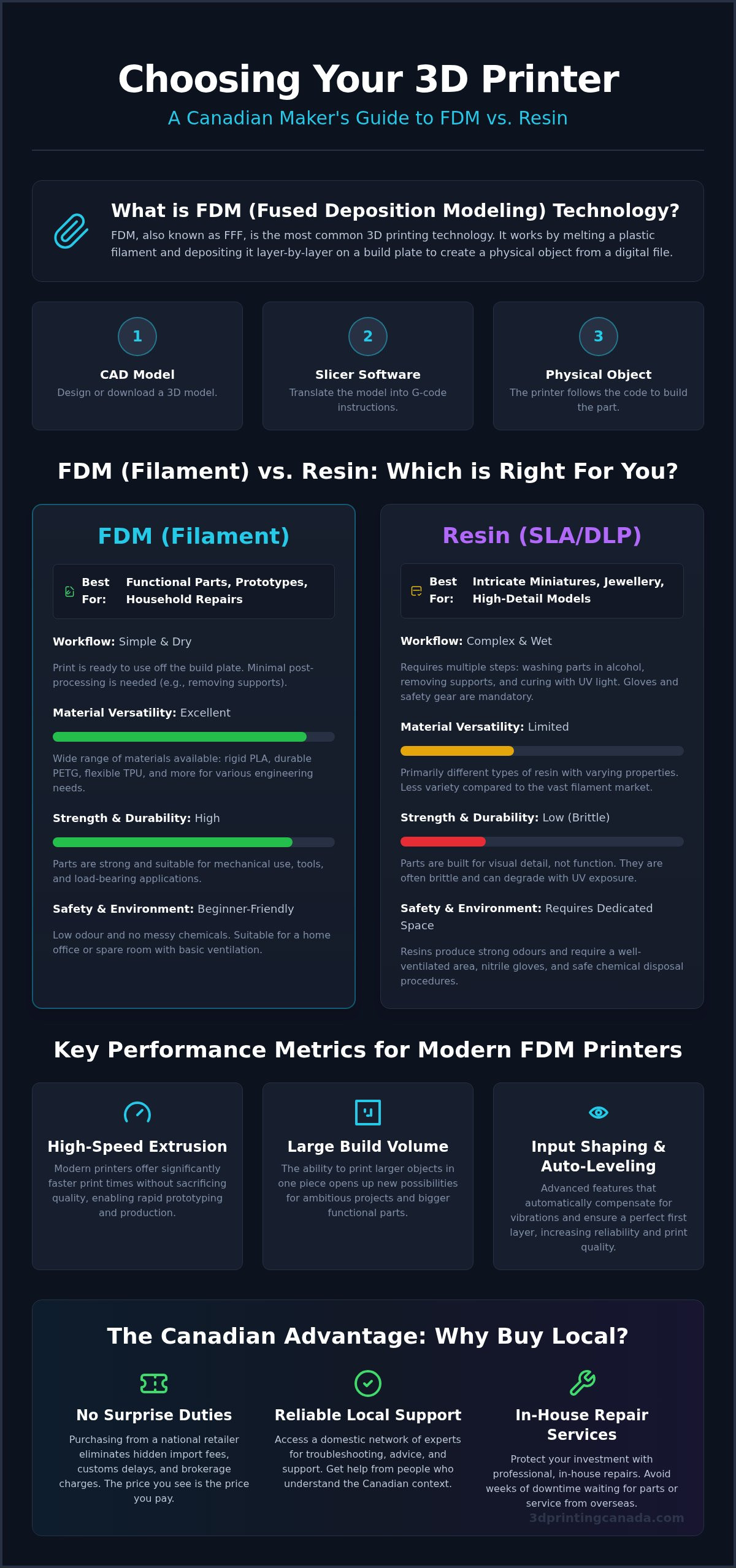
If you're looking for an FDM printer Canada offers plenty of choices that balance technical power with user-friendliness. Fused Deposition Modeling (FDM) is the process of building objects layer by layer using melted plastic. While you'll often hear the term Fused filament fabrication (FFF) used interchangeably, they describe the same core technology. It starts with a spool of thermoplastic filament. This material is pulled into a heated nozzle by an extruder, melted, and then precisely deposited onto a build plate to form your design. It's a straightforward process that has evolved rapidly over the last decade.
Success in this hobby depends on a simple software workflow. You'll start with Computer-Aided Design (CAD) software to create a 3D model or download a pre-made file. Once your design is ready, you use a "slicer" program. This software translates your 3D model into G-code. Think of G-code as a set of specific instructions that tells the printer exactly where to move, how fast to go, and how much plastic to extrude. This digital-to-physical transition is what makes 3D printing feel like magic.
The Mechanics of Fused Deposition Modeling
Modern machines rely on a precise motion system to turn digital files into physical objects. The X and Y axes control the horizontal movement of the print head, while the Z axis moves the build plate or the head vertically to create height. The heart of any FDM printer Canada hobbyists use is the extruder and the hotend. The extruder provides the "push" that moves the filament, while the hotend provides the heat to melt it. Your choice of layer height is a vital setting in your slicer; thinner layers provide a smoother finish and better detail, while thicker layers increase the structural strength and significantly reduce the time your print takes to finish.
Why FDM Dominates the Canadian Market
FDM has become the go-to standard for schools, libraries, and home workshops from coast to coast. It's significantly more affordable than industrial systems that use metal powders or high-powered lasers. It's also much cleaner and easier to manage in a standard room. Unlike resin printing, FDM doesn't usually require complex chemical wash stations or specialized UV curing boxes. This makes it a safer, more approachable option for beginners and educators. Because the technology has deep open-source roots, you'll find a massive network of Canadian makers ready to share advice, troubleshoot files, and help you organize your first successful project.
FDM vs. Resin: Which 3D Printer Should You Choose?
Deciding between an FDM printer and a resin machine is usually the first major hurdle for new makers. While resin printers are famous for incredible detail in miniatures, they come with a steep learning curve and a messy workflow. Most Canadians starting out will find that an FDM printer Canada offers provides the best balance of utility, ease of use, and structural strength. FDM parts are built to last; resin parts are built to be looked at. If you need a machine that can handle everything from household repairs to creative art, filament is the logical choice.
Workflow differences are often the deciding factor for home users. FDM is a "dry" process. Once your print finishes, you simply pop it off the bed and remove any support structures. Resin printing, however, is a "wet" process. It requires wearing nitrile gloves, using isopropyl alcohol baths to wash away uncured resin, and then curing the part under UV light. It's vital to follow established safety guidelines regarding ventilation and chemical disposal when working with these materials. For many, the simplicity of filament wins out.
Material Versatility: From PLA to Engineering Grade
FDM's biggest strength is the sheer variety of materials you can use. You aren't limited to just one type of plastic. You can switch between rigid PLA, heat-resistant PETG, or flexible TPU depending on what you're making. If you need gears, brackets, or household tools, the structural integrity of filament is hard to beat. PLA is the most reliable 3D printer Canada material for beginners because it prints at lower temperatures and doesn't warp easily. This versatility allows you to grow from simple decorative prints to complex engineering projects using the same machine.
Post-Processing and Safety Requirements
FDM machines don't produce the same intense odours as liquid resin, making them much better suited for a standard Canadian home office or spare bedroom. You just need a sturdy desk and a bit of clearance. Post-processing is straightforward; you can often use the parts immediately after printing, though you can also sand or paint them for a professional finish. Resin requires a dedicated, well-ventilated space to manage the chemicals and sticky residue. If you want to explore the different materials available for your first machine, you can browse our wide selection of filaments to see what's possible for your next project.
Key Performance Metrics for FDM Printers in 2026
2026 has been a massive year for the growth in 3D printing. We've moved past the days of constant manual calibration and tinkering just to get a single successful print. When you're shopping for an FDM printer Canada, look for features that prioritize your time and output. Auto-bed leveling is now a standard requirement rather than a luxury. It uses precision sensors to map the build plate and compensate for tiny imperfections automatically. This ensures your first layer sticks every single time without you having to touch a single leveling knob.
Direct drive extruders have also become the preferred choice for most makers. By placing the motor directly above the hotend, the machine gains much better control over the filament. This is especially vital if you plan to use flexible materials like TPU. Older Bowden tube setups often struggle with flexible filaments, causing them to bunch up like wet noodles and lead to messy clogs. A direct drive system keeps your workflow smooth and your material options open.
High-Speed Printing and Input Shaping
High-speed printing has completely changed the hobby. Modern firmware now uses "input shaping" to calculate and cancel out the physical vibrations that cause "ghosting" or "ringing" on your prints. This allows you to finish projects in hours that used to take days. CoreXY motion systems generally offer better throughput and stability at these high speeds compared to traditional Cartesian "bed slingers." To see how these different motion systems stack up in real-world testing, check out our guide on the most reliable 3d printer Canada.
Build Volume and Enclosure Benefits
Think about what you actually want to make before buying the biggest machine you can find. Most users realize that a standard build volume of 220mm to 250mm cubed is plenty for the vast majority of household projects. However, if you plan to use advanced engineering materials like ABS or Nylon, an enclosed printer is mandatory. These materials warp easily if they cool too quickly; an enclosure keeps the heat in and the drafts out. For the build surface, PEI spring steel plates have largely replaced glass. They offer incredible adhesion when hot and allow your finished parts to pop right off once the plate cools down. This simple hardware upgrade can save you hours of frustration with scraper tools and glue sticks.
Building Your Canadian Printing Station: Materials and Environment
Setting up your first FDM printer Canada station is an exciting milestone, but your success depends on more than just the machine. Your workspace needs to be a controlled environment where materials stay dry and temperatures remain steady. Whether you're working out of a dedicated home office or a corner of the basement, organizing your tools and managing your local climate will prevent the most common printing failures. A well-planned station doesn't just improve print quality; it makes the entire creative process more enjoyable and efficient.
Filament Selection and Storage
Choose your materials based on the specific requirements of your project. While we've discussed PLA as the beginner standard, you'll eventually want to branch out into PETG for mechanical parts or TPU for flexible gaskets and phone cases. Buying your 3D printer filament Canada supplies from a national source ensures you aren't waiting weeks for shipping or paying surprise duties at the border. It's also vital to remember that filament is hygroscopic. This means it absorbs moisture from the air, which leads to "stringing," popping sounds at the nozzle, and brittle finished parts. In humid Canadian summers, use airtight dry boxes or vacuum-sealed bags with desiccant packets to keep your spools in peak condition.
Managing Ambient Temperature for Large Prints
Basements are popular spots for an FDM printer Canada setup, but they're often the most challenging due to cold drafts and shifting temperatures. When the air around your print cools too quickly, the plastic shrinks and pulls away from the build plate. This creates "warping," which can ruin a 20-hour print in minutes. This issue is especially prevalent during the Canadian winter when home heating systems kick on and create significant air movement. Enclosed printers are a massive help here because they trap the heat generated by the bed and create a stable micro-climate for your part. If your machine is open, consider placing it away from windows and vents or using a dedicated enclosure to maintain thermal consistency. You can shop our full range of filaments and accessories to find everything you need to build a professional-grade station at home.
The 3D Printing Canada Advantage: Support and Service
Choosing an FDM printer Canada from a domestic retailer is about more than just avoiding the border. It's about establishing a relationship with a partner that understands the technical nuances of your machine. When you buy from international warehouses, you often face surprise brokerage fees and weeks of silence if a component fails. By sourcing your hardware through us, you skip the customs headache and gain access to a team of experts who speak your language. We maintain a deep stock of Bambu Lab accessories and specialized upgrade parts to ensure your workflow never grinds to a halt because of a missing nozzle or cooling fan.
Localized 3D Printer Repair Services
Every printer eventually requires maintenance. Whether it's a stubborn hotend clog or a complex motherboard failure, having a domestic safety net is invaluable. Our professional 3D printer repair services Canada team handles everything in-house. This means you don't have to worry about the cost and risk of shipping your delicate equipment to a different continent for a simple fix. Our technicians have seen it all and can resolve hardware issues that would leave most hobbyists scratching their heads. This local technical support provides the peace of mind you need to push your machine to its limits, knowing that help is just a shipment away within our own borders.
Fast National Shipping and Warranty Protection
Speed matters when you're in the middle of a big project. We offer fast national shipping from our central hub, ensuring that your filaments and replacement parts arrive when you need them. Shopping with a domestic partner also simplifies the warranty process. Instead of navigating international consumer laws, you deal directly with us. 3D Printing Canada operates as a division of N3 Technologies Inc., which provides the corporate reliability and logistical backbone required to support makers across the country. We take pride in being the "expert hands" that keep Canadian innovation moving. Whether you're looking for your first spool of PLA or a high-end 3D scanner, you can trust that our support ecosystem is built to protect your investment for years to come.
Launch Your Next Project with Confidence
Choosing your first 3D printer is the first step toward bringing your digital ideas to life. You now understand how modern FDM technology balances structural strength with approachable workflows. You also know how to manage the Canadian climate to keep your prints from warping and your filament dry. Most importantly, you realize that success isn't just about the machine; it's about the local support system behind it. Whether you need an authorized Bambu Lab accessory or an expert-vetted filament selection, starting with a domestic partner ensures you stay focused on creating rather than troubleshooting logistics.
We're here to be your "expert hands" throughout this entire journey. From our professional in-house repair services to our national shipping hub, we provide the reliability you need to keep your shop running. Finding the right FDM printer Canada has to offer is simple when you have a community-oriented team in your corner. Don't let technical jargon or international duties slow you down. Take the leap. Join the thousands of Canadian makers already redefining what's possible with filament.
Browse our full range of FDM printers and filaments with fast Canada-wide shipping
Frequently Asked Questions
What is the best FDM printer for a beginner in Canada?
The best FDM printer Canada beginners should consider is one with automatic bed leveling and a proven support network. Models from Bambu Lab and Creality are popular because they offer "out of the box" reliability. These machines minimize the technical hurdles that used to frustrate new users. Look for a printer that features a PEI build plate and direct drive extrusion to ensure you can handle various materials as you grow in the hobby.
How much does it cost to run an FDM printer per hour?
Most machines consume roughly 50 to 150 watts while printing, which costs only a few cents per hour in electricity depending on your local Canadian utility rates. The real cost is the filament consumed during that time. A fast printer might use ten grams of plastic per hour, adding perhaps fifty cents to the total. Overall, you're looking at a very low hourly operating cost that makes long print jobs quite affordable.
Can I use any brand of filament in my FDM printer?
Most machines are open-material systems, meaning you can use any brand of 1.75mm filament. However, some high-end printers use RFID tags to automatically detect settings for their own brand of plastic. You can still use third-party spools, but you might need to input the settings manually. We always recommend using high-quality filament from a reliable Canadian source to prevent clogs and ensure consistent layer adhesion across your entire project.
Do FDM printers require a lot of maintenance?
FDM printers don't require constant work, but they do need regular "tune-ups" to stay accurate. You'll need to wipe down the build plate with isopropyl alcohol after every few prints to maintain adhesion. Periodically check the tension on your belts and lubricate the lead screws to prevent squeaking or layer shifts. Replacing a worn-out nozzle every few months is also a standard part of ownership that keeps your print quality sharp and professional.
Where can I get my 3D printer repaired in Canada?
You can get your FDM printer Canada hardware serviced directly at our national repair centre. We provide professional in-house 3D printer repair services for major brands like Bambu Lab and Creality. This saves you from the high costs and risks of shipping your equipment internationally. Our expert technicians can handle everything from motherboard replacements to complex mechanical alignments, ensuring your investment stays in peak condition without the long wait times associated with foreign support tickets.
Is FDM printing safe to do in an apartment?
FDM printing is generally safe for apartment life if you choose your materials wisely. PLA is the best choice for small spaces because it's made from cornstarch and produces minimal odour. However, you should always ensure your room is well-ventilated. If you plan to print with materials like ABS or ASA, which release stronger fumes, an enclosed printer with a HEPA filter is mandatory to maintain healthy air quality in a confined living area.
What is the difference between FDM and FFF?
There is no technical difference between the two terms. Fused Deposition Modeling (FDM) was originally a trademarked name, so the open-source community adopted Fused Filament Fabrication (FFF) as a generic alternative. Both terms describe the same process of melting plastic and depositing it layer by layer. In the modern market, you'll see both used interchangeably by manufacturers and retailers. They refer to the exact same hardware and printing method you're researching.
How long does a typical 3D print take on an FDM machine?
Print times vary wildly based on the size and complexity of your object. A small toy or a simple bracket might take forty minutes, while a large, detailed helmet could take several days. High-speed machines in 2026 have significantly reduced these wait times through advanced firmware and motion systems. Your choice of layer height also plays a role; thinner layers look better but take much longer to finish than thicker, more functional layers.